

Seeing a growing number of players shift from casual gaming to structured competition is no accident—the esports world now rivals traditional sports in organization and prestige. For anyone aiming to turn passion into profession, understanding the difference between casual play and true competitive gaming will guide your next steps. This guide breaks down how esports formalized its scene, what sets it apart, and how you can pursue top-level success in games that dominate the global stage.
$ads={1}
{getToc} $title={Table of Contents}
Key Takeaways
| Point | Details |
|---|---|
| Understanding the Competitive Framework | Competitive gaming differs significantly from casual gaming, focusing on structured tournaments, sponsorships, and ranking systems that facilitate professional play. |
| Skill Development for Success | Aspiring professionals must cultivate a mix of mechanical abilities, cognitive skills, and soft skills to excel in the competitive landscape of esports. |
| Career Opportunities and Risks | While esports offers lucrative financial rewards through salaries and sponsorships, it also presents risks like career longevity challenges and mental health concerns. |
| The Importance of Game Selection | Choosing a game with a robust competitive scene and established structure is crucial for aspiring players aiming to transition from casual gaming to professional careers. |
Defining Competitive Gaming and Esports
[Competitive gaming and esports are not just about playing video games for fun. They involve structured, organized competition where players compete in ranked matches and tournament settings.
Esports represents one of the fastest-growing sectors in global entertainment. The distinction between casual gaming and esports matters because competitive gaming follows specific rules, organizations, and professional standards.
What separates competitive gaming from regular play?
Casual gaming happens when you play for enjoyment. Competitive gaming happens when you play to win against others under established rules.
The key differences include:
- Structured competition: Tournaments, leagues, and ranking systems organize players
- Professional infrastructure: Sponsorships, live broadcasting, and prize pools fund the scene
- Skill measurement: Rating systems and ladder rankings track player performance
- Team organization: Coaching, practice schedules, and strategic preparation
- Institutional support: Esports scholarships and university integration legitimize the field
Esports involves organized and casual play of competitive computer games often facilitated through in-game ranking systems and structured tournaments.
Esports shares many traits with traditional sports. Both require training, team coordination, mental discipline, and competition against opponents. However, esports performance happens digitally rather than physically.
Why does this definition matter for you?
Understanding competitive gaming helps you recognize what separates hobby play from professional pursuit. It shows you the infrastructure, opportunities, and expectations in the scene.
Academic researchers now study esports globally, examining cognitive performance, team dynamics, and social impacts. This recognition reflects how seriously the industry takes competitive gaming.
Here’s a comparison of traditional sports and esports to highlight their similarities and differences:
| Aspect | Traditional Sports | Esports |
|---|---|---|
| Competition Setting | Physical arenas and stadiums | Digital platforms and LAN events |
| Skill Requirements | Physical fitness and teamwork | Hand-eye coordination, strategic thinking, and reaction speed |
| Career Longevity | Often 10+ years | Typically 5-7 years |
| Spectator Experience | In-person and televised | Streaming and global online reach |
Esports has evolved from basement tournaments to formalized systems with scholarships, broadcasting rights, and global recognition.
The formalization of esports means opportunities exist for aspiring professionals. Universities now offer scholarships. Organizations recruit talent. Sponsors invest billions. Broadcasting reaches millions of viewers worldwide.
Your path from casual player to professional depends on understanding this structure. You need to know which games have competitive scenes, what tournaments exist, and how ranking systems work.
Pro tip: Start by identifying one game with an active competitive scene, then research its ranking system, professional leagues, and entry-level tournaments to understand the competitive pathway available to you.
Major Genres and Game Types
Not all video games work for competitive play. The best esports titles share specific characteristics that make them spectator-friendly and strategically deep.
The mainstream esports industry recognizes several key genres that dominate tournaments and professional scenes worldwide.
Core Esports Genres
First-person shooters, MOBAs, and real-time strategy games lead the competitive gaming landscape. These genres thrive because they reward skill, strategy, and teamwork equally.
Here are the major competitive genres:
- First-Person Shooters (FPS): Fast-paced games requiring precise aim, map knowledge, and team coordination. Examples dominate esports revenue.
- Multiplayer Online Battle Arena (MOBA): 5v5 team-based games with complex strategy, character selection, and objective control. Massive global audiences.
- Real-Time Strategy (RTS): Games demanding resource management, unit control, and rapid decision-making. Known for incredible skill ceilings.
- Fighting Games: One-on-one combat with frame-perfect inputs and character mastery. Highly technical and entertaining to watch.
- Sports Simulations: Virtual versions of real sports. Appeal to both traditional sports fans and gamers.
- Card Games: Digital collectible card games with deck building and tactical play. Growing competitive scenes.
Why These Genres Dominate
Not every game works in esports. Successful competitive titles share key traits that make them viable for professional play.
They require high skill ceilings. New players can learn basics quickly, but mastery takes thousands of hours. This creates meaningful progression and competitive hierarchy.
They demand team coordination. Most esports require communication, callouts, and synchronized execution. This builds community and creates compelling storylines.
Shooters and MOBAs lead esports because they balance skill expression with spectator appeal. Millions can watch and understand what’s happening.
They have clear win conditions. Viewers instantly understand who won and why. No confusion about objectives or scoring.
The best esports genres combine mechanical skill, strategic depth, and spectator-friendly gameplay that casual viewers can follow.
Emerging Competitive Spaces
Traditional esports dominate now, but new genres are entering competitive scenes. Battle royales attract millions of players and viewers. Auto-battlers and roguelike games are gaining tournament support.
Your choice of game matters enormously for competitive aspirations. Playing a title with an established esports infrastructure means tournaments exist, sponsorships are available, and career paths are clearer.
Pro tip: Choose a game with an active professional league or established tournament circuit rather than hoping your favorite game becomes competitive—this gives you realistic opportunities to climb the ranks and pursue professional play.
How Tournaments and Leagues Operate
Esports tournaments and leagues follow structured formats that differ from casual gaming. Understanding how they work helps you navigate the competitive pathway from amateur to professional.
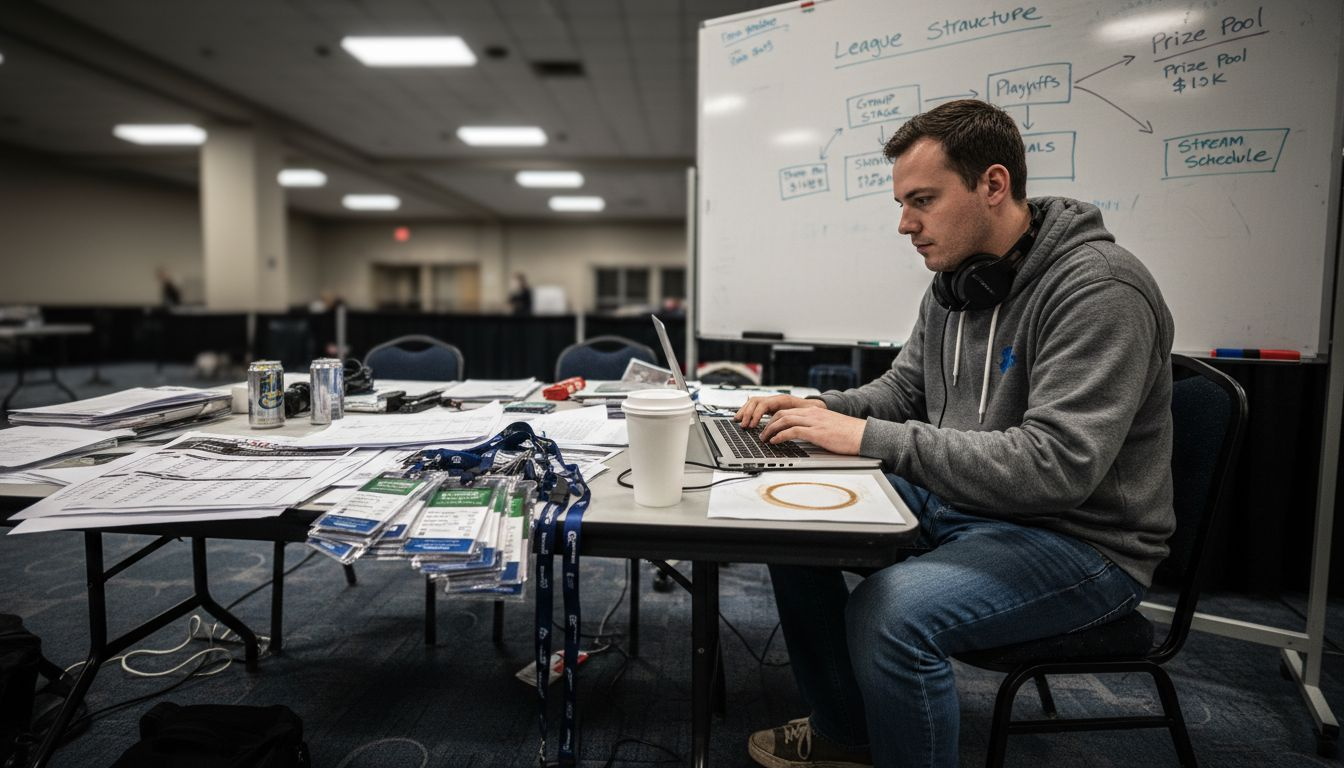
Most competitive games operate with a two-tier system: regional leagues feed into international championships. This pyramid structure creates clear progression routes for aspiring professionals.
The League Structure
Regional leagues lead to international championships, forming the backbone of organized esports. Players advance through seasonal competitions with consistent schedules.
Typical esports organizations include:
- Regional Leagues: Domestic competitions where teams play fixed schedules over months. Top teams qualify for international events.
- Seasonal Play: Spring and summer splits create natural progression windows. Teams accumulate points and ranking positions.
- Playoffs: Top regional teams compete in single or double elimination tournaments to determine regional champions.
- International Championships: The pinnacle events where regional winners compete globally. These feature massive prize pools and viewership.
- Qualifying Tournaments: Open competitions where any team can enter and fight for spots in major leagues.
Prize Pools and Sponsorship
Professional esports runs on money from sponsors, broadcasters, and game publishers. Major titles feature prize pools worth millions annually.
Significant prize pools attract top talent globally. Teams compete for salaries, tournament winnings, and sponsorship deals simultaneously.
Money flows through multiple channels. Game developers fund official leagues. Tech companies sponsor teams and events. Broadcasting platforms pay for exclusive content rights. Merchandise sales and ticket revenue add additional income.
Your earning potential depends on your team’s placement and sponsorship value. Winners earn six-figure tournament prizes. Popular teams attract endorsement deals worth hundreds of thousands annually.
Event Management and Competitive Integrity
Event management requires careful planning and digital infrastructure. Live streaming to millions of viewers requires technical excellence.
Organizations must prevent cheating, ensure fair play, and maintain rules enforcement. Officials watch for account boosting, software exploits, and match fixing.
Professional esports tournaments demand the same competitive integrity as traditional sports, with robust systems preventing cheating and ensuring fair outcomes.
Major tournaments now use anti-cheat software, dedicated servers, and official observers. Some events require players at physical venues for security.
This infrastructure costs millions but legitimizes esports as a serious competitive field.
Pro tip: Research the specific league structure for your game—know how many regional leagues exist, what the promotion pathway looks like, and which tournaments offer open entry—this clarifies your route to professional competition.
Key Skills and Requirements for Entry
Breaking into competitive gaming requires more than quick reflexes. Professional esports demands a specific skill set that separates casual players from competitive contenders.
The skills you need extend far beyond mechanical ability. Mental toughness, communication, and strategic thinking matter equally.
Mechanical and Technical Skills
Game-specific mechanics form your foundation. In shooters, you need pixel-perfect aim and map awareness. In MOBAs, you need champion mastery and positioning knowledge. In fighting games, frame data and combo execution define your ceiling.
These skills develop through thousands of hours of practice. Most professionals have invested 5,000-10,000 hours before competing professionally. There is no shortcut.
You also need hardware competency. Understanding your equipment, optimizing settings, and troubleshooting technical problems prevents performance issues during competition.
Cognitive and Strategic Abilities
Teamwork, leadership, and strategic thinking drive competitive success beyond individual skill. Teams that communicate effectively and adapt strategies win consistently.
Critical cognitive skills include:
- Decision-making: Rapid, accurate choices under pressure separate winners from losers
- Game sense: Reading opponent patterns and predicting their movements
- Adaptability: Switching strategies when opponents counter your primary approach
- Shot calling: Leading your team through communication and confidence
- Problem-solving: Finding unconventional solutions to tactical challenges
Soft Skills That Matter
Communication and collaboration are non-negotiable in team esports. You cannot succeed as a solo player if your teammates cannot understand your callouts.
Your soft skills directly impact team performance:
- Clear communication: Precise callouts without ego or drama
- Coachability: Accepting criticism and improving based on feedback
- Mental resilience: Staying composed after losing crucial rounds
- Work ethic: Training consistently even when motivation drops
- Professionalism: Representing sponsors and organizations with integrity
Physical and Mental Requirements
Professional esports demands physical endurance, mental clarity, and emotional control during high-pressure competition lasting 8-12 hours daily.
Physical health affects performance directly. Wrist injuries, eye strain, and posture problems plague competitive players who ignore conditioning. Top professionals maintain fitness routines, stretch regularly, and prioritize sleep.
Mental health matters equally. Anxiety, burnout, and depression affect many esports professionals. Learning stress management and seeking help when needed strengthens your competitive foundation.
You also need discipline. Knowing when to stop playing and rest separates burnt-out players from sustained professionals.
Starting Your Development Path
You cannot learn these skills overnight. Development requires intentional practice focused on weak areas, not just grinding ranked matches.
Begin by identifying your specific weaknesses. Are your mechanics weak? Record yourself and study your gameplay. Is your communication poor? Ask teammates for feedback. Does your decision-making fail under pressure? Play more competitive matches to build composure.
Pro tip: Start by excelling at one game and one role rather than bouncing between titles—depth of skill in a single area builds faster and attracts teams seeking specialists.
Risks, Rewards, and Common Challenges
Competitive gaming offers genuine rewards but also poses real risks that aspiring professionals must understand. Success requires balancing ambition with self-awareness about potential pitfalls.
The rewards attract millions to esports annually. The risks demand serious consideration before committing your life to competition.
The Financial and Career Rewards
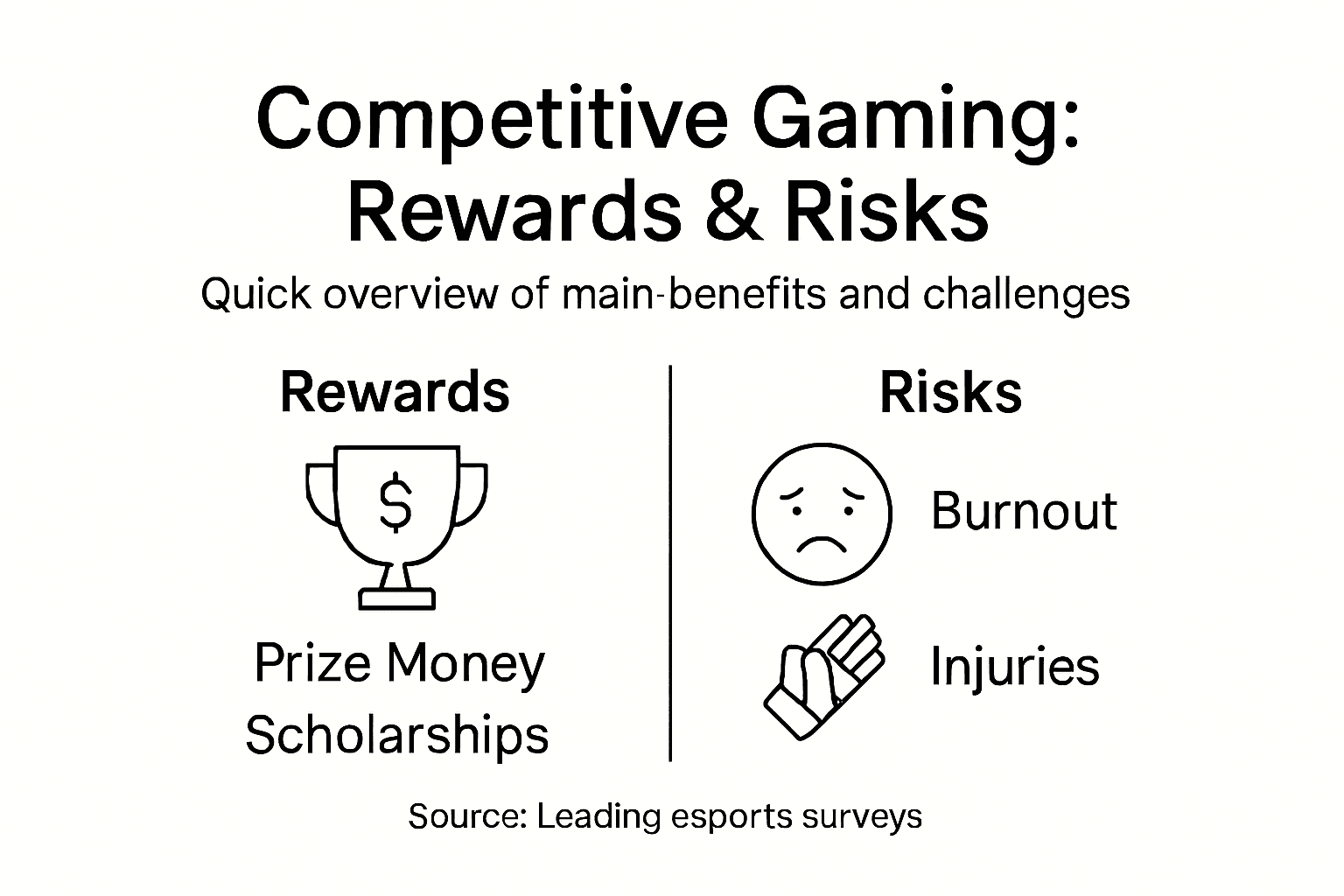
Top professionals earn substantial income from multiple sources. Salaries for tier-one teams reach $10,000-$50,000 monthly. Tournament winnings add hundreds of thousands more annually. Sponsorships and streaming revenue create additional income streams.
Career opportunities extend beyond playing. Teams need analysts, coaches, managers, and content creators. Organizations value esports experience across business roles.
Educational pathways have opened. Universities now offer esports scholarships. This creates financial support and degree completion opportunities simultaneously.
The following table summarizes key risks and rewards associated with a career in competitive gaming:
| Factor | Main Rewards | Main Risks |
|---|---|---|
| Financial | High salaries, sponsorships | Income instability, short careers |
| Physical Health | Possible fitness incentives | Injury, strain, poor posture |
| Mental Health | Recognition, teamwork | Burnout, anxiety, isolation |
| Career Growth | Scholarships, transition roles | Limited longevity, tough exit path |
$ads={2}
The Physical Health Risks
"Physical ailments from prolonged sedentary activity plague competitive players who ignore conditioning. Wrist injuries, repetitive strain syndrome, and carpal tunnel syndrome can end careers prematurely."
Common physical challenges include:
- Eye strain and vision problems: 12+ hour daily gaming sessions damage eyesight
- Poor posture and back pain: Incorrect chair setup causes chronic spinal issues
- Wrist and hand injuries: Repetitive clicking motions create inflammation and pain
- Sleep disruption: Irregular schedules destroy circadian rhythms and recovery
- Weight gain: Sedentary lifestyle combined with poor nutrition creates health issues
Mental Health and Psychological Challenges
"Mental health stresses and problematic gaming behavior affect many competitive players. The pressure to perform constantly creates anxiety and depression."
Psychological risks include:
- Addiction: Gaming addiction destroys relationships, education, and career development
- Performance anxiety: Fear of failure during crucial matches affects decision-making
- Burnout: Grinding constantly without breaks leads to emotional exhaustion
- Social isolation: Focusing solely on gaming damages friendships and family connections
- Identity crisis: Basing your entire identity on gaming creates vulnerability
The Sustainability Challenge
Professional esports careers average 5-7 years before players retire due to burnout, injury, or declining competitiveness.
Your competitive prime is short. Unlike traditional sports, esports offers limited career longevity. Most professionals cannot maintain tier-one performance past age 25-30.
This creates pressure to earn and build your future quickly. Without a backup plan, retired players struggle transitioning to other careers.
Balancing Risk and Reward
Successful professionals mitigate risks through intentional lifestyle choices. They maintain physical fitness. They prioritize mental health. They develop skills transferable beyond gaming.
The players who thrive longest treat esports seriously but not exclusively. They have education. They have savings. They have career options beyond playing.
Pro tip: Pursue esports aggressively but simultaneously build backup skills—complete your education, develop streaming or content expertise, and network in esports business roles so you have career options if your playing career ends unexpectedly.
Elevate Your Competitive Gaming Journey With GZone Pro
Competitive gaming demands more than just skill. It requires deep understanding of esports structures, developing critical mechanical and strategic abilities, and navigating tournament pathways all while managing physical and mental well-being. If you are ready to sharpen your edge and transform from a casual player to a serious competitor you need reliable resources that cover everything from gaming strategies to the latest in esports technology.
Discover how to build your perfect setup with expert gaming accessories reviews, follow in-depth guides and tutorials tailored for aspiring pros, and stay informed on key esports developments at GZone Pro. Start harnessing the knowledge that leads to success and make your competitive goals a reality today.
Frequently Asked Questions
What is the difference between competitive gaming and casual gaming?
Competitive gaming involves structured competitions, ranked matches, and professional standards, while casual gaming is primarily for fun without the pressure of competition.
Why are certain game genres more popular in esports?
Certain genres like first-person shooters and MOBAs are popular in esports because they require significant skill and strategy, have clear win conditions, and are spectator-friendly.
How do esports tournaments and leagues operate?
Esports tournaments typically follow a two-tier system where regional leagues feed into international championships, allowing players to progress through organized competitions and qualify for major events.
What skills are required to succeed in competitive gaming?
Successful competitive players need mechanical skills specific to their games, cognitive and strategic abilities, as well as soft skills like communication, teamwork, and mental resilience.