
Missing that critical callout or struggling with unclear team communication in the heat of a match can cost any competitive gamer a win. Choosing a wireless headset tailored for high-level play matters, as even slight interruptions or poor sound quality make a difference during intense multiplayer sessions. This guide walks you through assessing your gaming preferences, understanding key headset features, and making a smart investment in a device that delivers reliable audio and clear communication when it counts most.
$ads={1}
Quick Summary
| Key Point | Explanation |
|---|---|
| 1. Assess Your Gaming Needs | Understand your gaming style and requirements before selecting a headset. Consider platform, genres, and communication needs. |
| 2. Research Headset Options | Investigate top-rated wireless headsets focusing on sound quality, battery life, and compatibility with your gaming system. |
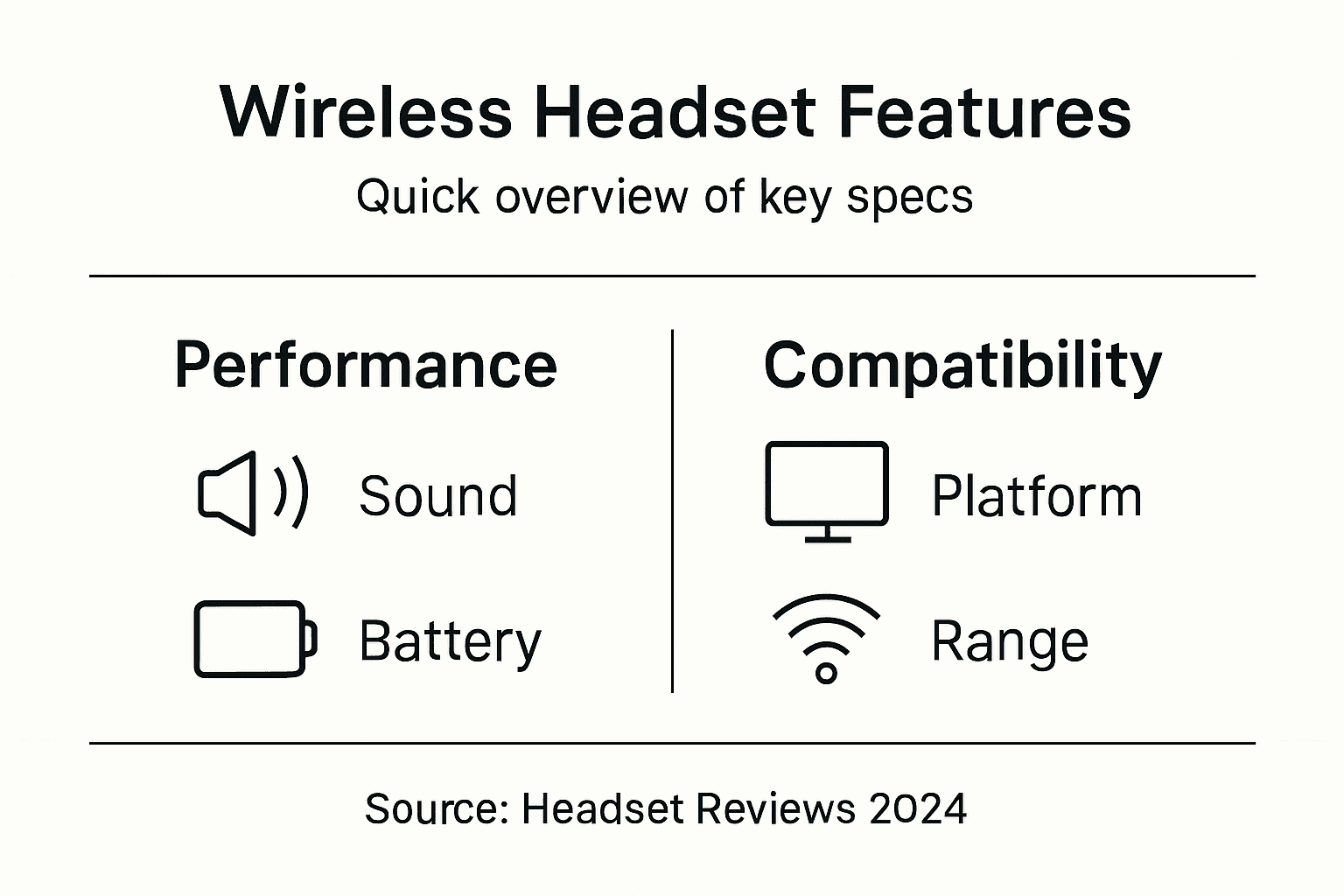
| 3. Compare Technical Specifications | Analyze detailed features such as audio performance and battery life to ensure the headset meets your specific needs. |
| 4. Optimize Your Setup | Properly set up your headset by charging it fully, updating firmware, and configuring device settings for the best performance. |
| 5. Test Audio and Microphone | Conduct thorough tests on sound quality, microphone performance, and noise cancellation to verify optimal function. |
Step 1: Assess your gaming needs and preferences
Choosing the perfect wireless gaming headset starts with understanding your unique gaming profile. Before diving into technical specifications, you need to map out your specific gaming requirements, playing style, and performance expectations. Gathering detailed information about your gaming needs will help you make a strategic purchase that truly enhances your gaming experience.
To effectively assess your gaming needs, consider these critical factors:
- Gaming Platform: Are you a PC gamer, console player, or do you game across multiple systems?
- Gaming Genres: Different headsets perform better for specific game types like first-person shooters, multiplayer online games, or strategy games
- Average Gaming Duration: Long gaming sessions require comfortable headsets with excellent battery life
- Communication Requirements: Competitive multiplayer games demand high-quality microphones with noise cancellation
Your personal preferences play a significant role in selecting the right wireless headset. Individual risk preferences and technology needs directly impact your decision-making process. Think about your budget, sound quality expectations, and must-have features like surround sound, wireless range, or compatibility with specific gaming platforms.
Here’s a summary of how headset features impact the gaming experience:
| Feature Category | User Benefit | Example Impact |
|---|---|---|
| Sound Quality | Immersive gameplay | Clear spatial awareness |
| Battery Life | Fewer interruptions | Longer play sessions |
| Wireless Range | Freedom of movement | Consistent connection |
| Microphone Clarity | Effective team communication | Clear voice chat |
| Comfort & Ergonomics | Reduced fatigue | All-day comfort |
Pro tip: Create a checklist of your top 3-5 non-negotiable headset features before shopping to stay focused and avoid getting overwhelmed by marketing hype.
Pro tip: Write down your specific gaming needs and prioritize them from most to least important to streamline your headset selection process.
Step 2: Research top-rated wireless headsets
Now that you understand your gaming needs, it’s time to dive into researching the best wireless headsets on the market. Advanced wireless technology research has dramatically improved gaming headset performance, giving you more options than ever before. Your goal is to find a headset that matches your specific requirements while offering top-tier audio quality and gaming functionality.
When researching wireless headsets, focus on these key evaluation criteria:
- Sound Quality: Look for headsets with high-definition audio and surround sound capabilities
- Battery Life: Compare battery performance across different models
- Wireless Range: Check connectivity distance and stability
- Microphone Performance: Evaluate noise cancellation and clarity features
- Compatibility: Confirm support for your specific gaming platforms
NASA technology innovations have significantly influenced wireless headset design, bringing aerospace-grade communication technologies into gaming peripherals. Pay attention to lightweight designs, crystal-clear audio processing, and ergonomic features that enhance your gaming experience.
Pro tip: Cross-reference professional reviews, user ratings, and expert gaming community recommendations to get a comprehensive understanding of each headset’s performance.
Pro tip: Create a spreadsheet to compare headset specifications side by side, making it easier to identify the best match for your gaming needs.
Step 3: Compare essential features and specifications
Now that you’ve researched potential wireless headsets, it’s time to dig deep into their technical specifications. Wireless communication protocols reveal critical details about headset performance that go far beyond basic marketing claims. Understanding these technical nuances will help you make an informed decision that matches your precise gaming requirements.
When comparing wireless headset specifications, focus on these essential technical features:
- Audio Performance: Examine frequency response range, total harmonic distortion, and sound pressure levels
- Connection Technology: Compare Bluetooth, 2.4 GHz, and Wi-Fi wireless protocols
- Battery Specifications: Evaluate charging time, total battery life, and standby duration
- Microphone Quality: Check noise cancellation rating, frequency response, and pickup pattern
- Wireless Range: Measure effective communication distance and signal stability
Future wireless communication research highlights complex factors like signal processing and electromagnetic compatibility that dramatically impact headset performance. Pay close attention to technical details such as latency, interference resistance, and signal strength to ensure a seamless gaming experience.
This table helps you evaluate connection technologies for wireless headsets:
| Technology | Typical Range | Latency Level | Ideal Use Case |
|---|---|---|---|
| Bluetooth | Up to 30 feet | Moderate latency | Casual gaming, mobile use |
| 2.4 GHz RF | Up to 50–100 feet | Low latency | Competitive PC gaming |
| Wi-Fi | Varies (often higher) | Very low latency | Advanced, multi-room use |
$ads={2}
Pro tip: Technical specifications can be overwhelming. Focus on the features that directly impact your specific gaming needs.
Pro tip: Create a weighted scoring system that ranks specifications based on your personal gaming priorities to simplify your comparison process.
Step 4: Set up your chosen wireless headset
With your perfect wireless headset selected, it’s time to get everything up and running smoothly. Wireless system deployment strategies emphasize the importance of careful configuration to maximize performance and minimize potential connectivity issues. Your setup process will vary slightly depending on your specific gaming platform and headset model.
Follow these universal setup steps for a seamless wireless headset installation:
- Charge Completely: Fully charge your headset before first use
- Update Firmware: Check manufacturer’s website for latest device drivers
- Connection Method: Select appropriate pairing method (Bluetooth, USB dongle, or direct wireless)
- Audio Settings: Configure sound output and microphone input in your device’s system settings
- Test Communication: Verify microphone and audio output work correctly
Pay special attention to wireless signal placement. Position your wireless receiver or base station in an unobstructed area with minimal interference from other electronic devices. This helps maintain a stable connection and prevents random disconnections during critical gaming moments.
Pro tip: Keep your wireless receiver or base station within the recommended range specified by the manufacturer to ensure optimal performance.
Pro tip: Take a photo of your initial settings before making changes, so you can easily revert if something goes wrong.
Step 5: Test sound quality and microphone performance
With your wireless headset set up, it’s time to ensure you’re getting the best possible audio experience. Wireless communication measurement techniques provide crucial insights into evaluating sound performance beyond simple visual inspection. Understanding how to thoroughly test your headset will help you maximize its potential and identify any potential issues.
Use these comprehensive testing methods to assess your wireless headset’s audio capabilities:
- Sound Quality Test: Play multiple audio tracks across different genres
- Microphone Clarity: Record and playback your voice in various environments
- Spatial Audio Verification: Test surround sound positioning in gaming scenarios
- Noise Cancellation Check: Evaluate background noise reduction capabilities
- Latency Assessment: Compare audio sync in different gaming and communication platforms
Sound measurement tools can help you quantify your headset’s performance objectively. Pay close attention to audio clarity, microphone sensitivity, and overall sound reproduction across different volume levels and audio frequencies.
Pro tip: Use professional audio testing websites or apps to get detailed performance metrics that go beyond basic listening tests.
Pro tip: Create a short recording checklist to systematically evaluate your headset’s microphone performance in multiple scenarios.
Find Your Perfect Wireless Gaming Headset with Expert Guidance
Struggling to choose the best wireless headset that matches your gaming style and technical needs can feel overwhelming. This article highlights the key pain points gamers face such as balancing comfort, sound quality, battery life, and microphone clarity while navigating complex wireless protocols. At Games Zone Pro, we understand your frustration and help you cut through the noise with clear, in-depth comparisons and expert tips that put you in control.
Unlock the next level of gaming audio today by exploring our detailed headset guides and reviews that align with your unique preferences. Visit us at Games Zone Pro to access critical insights on wireless headset technology, battery optimization strategies, and platform compatibility. Don’t wait to elevate your gaming experience with smarter choices and proven advice available now at Games Zone Pro. Your ultimate gaming sound setup is just a click away.
Frequently Asked Questions
How do I assess my gaming needs when choosing a wireless headset?
Start by identifying your gaming platform, genres, and communication requirements. Make a list of your top 3-5 must-have features, such as sound quality or battery life, to streamline your decision-making process.
What key features should I compare when researching wireless gaming headsets?
Look for sound quality, battery life, microphone performance, wireless range, and compatibility with your gaming platform. Create a comparison chart to evaluate these features side by side to find the best fit for your gaming style.
How do I set up my new wireless gaming headset?
Fully charge your headset, update its firmware, and select the appropriate connection method. After connecting, configure the audio settings in your device and test the microphone to ensure everything is functioning properly.
What steps can I take to test sound quality and microphone performance?
Play various audio tracks to evaluate sound quality, and record your voice to assess microphone clarity. Consider testing surround sound features during gameplay to check spatial audio positioning and verify noise cancellation effectiveness.
How can I maximize the performance of my wireless headset?
Position your wireless receiver in an unobstructed location to minimize interference and ensure a stable connection. Keep the receiver within the manufacturer’s recommended range to avoid disconnections, especially during intense gaming sessions.